·
3 min read
Should you report fake support scams to the FTC or IC3? When it helps a company
The FTC and FBI's IC3 won't take down a fake account, but reports can still matter. When a company should file, what to include, and what to expect.


ChainPatrol
Yes, in some cases, but not to get a fake account taken down. The FTC (at ReportFraud.ftc.gov) and the FBI's Internet Crime Complaint Center (IC3) collect reports for law enforcement; neither removes accounts or sites for you. File when customers have lost money, when the same operation keeps targeting your brand, or when you want an official record. Keep using platform reports for removal.
Here's what each agency does with a report, when it's worth a company's time, and what to include. For removal itself, see fake support account takedowns.
What each agency does
FTC (ReportFraud.ftc.gov) | FBI IC3 (ic3.gov) | |
|---|---|---|
What it is | The Federal Trade Commission's fraud reporting site | The FBI's central hub for reporting cyber-enabled crime |
Who can report | Anyone, including businesses that see their name used in a scam | Victims, or a third party filing on a victim's behalf |
What happens | Reports inform FTC cases and are shared with law enforcement partners | An analyst reviews it and forwards it to law enforcement and partner agencies as appropriate |
Will they reply? | Not usually about individual reports | IC3 says you won't hear back and can't guarantee investigation |
Will it remove the fake? | No | No |
Why the FTC route matters more since 2024
The FTC's rule on impersonation of government and businesses took effect in April 2024. It lets the FTC take scammers who impersonate businesses to federal court to seek refunds for consumers and civil penalties. The rule covers using a company's logo, lookalike websites and email addresses, and falsely implying an affiliation, which describes most fake support operations. The FTC said business and government impersonation scams cost consumers $2.95 billion in 2024.
Your report won't trigger a case on its own. Reports from many companies and customers are what show the FTC a pattern worth acting on.
When a company should file
Customers lost money to a fake support account or site using your name. Point them to IC3 and ReportFraud.ftc.gov, and consider filing a company report too.
The same operation keeps coming back under new names, domains and accounts.
You want an official record for your fraud, legal or compliance team, or for a regulator.
A payment trail exists, such as wallet addresses, bank details or payment processors used by the scammer.
What to include
The fake accounts, websites and apps, with links and dates.
Screenshots of what customers saw.
Any payment details customers shared: wallet addresses, transaction IDs, amounts and dates.
Your official accounts and website, so the difference is clear.
On ReportFraud.ftc.gov, choose the option for a scam involving a well-known or trusted business.
What not to expect
No status updates, no removal, and no fixed timeline. Treat agency reports as part of the record, alongside the platform reports, registrar reports and blocking that actually stop the harm.
Frequently asked questions
Will reporting to the FTC get a fake account removed?
No. The FTC doesn't remove accounts or websites. Use platform, registrar and host reports for that.
Can a company file an IC3 complaint if a customer lost money?
IC3 accepts complaints from victims and from third parties filing on a victim's behalf. Customers who lost money should file their own report too.
Is this legal advice?
No. Talk to your counsel about when and how your company should report.
Want to see which fake accounts and sites are using your name before customers report them? Run a free scan.
Sources
Accessed October 2026. Platform rules and processes change; check each source for the latest.
Fakes of your brand already out there?
ChainPatrol finds them, blocks the links in wallets and browsers, and files the takedowns for you.
More from The Impersonation Institute
How to report business impersonation on X: impersonation vs trademark
X gives companies two routes: an impersonation report and a trademark complaint. Which to use for a fake brand or support account, and what to include.
ChainPatrol
Fake support accounts
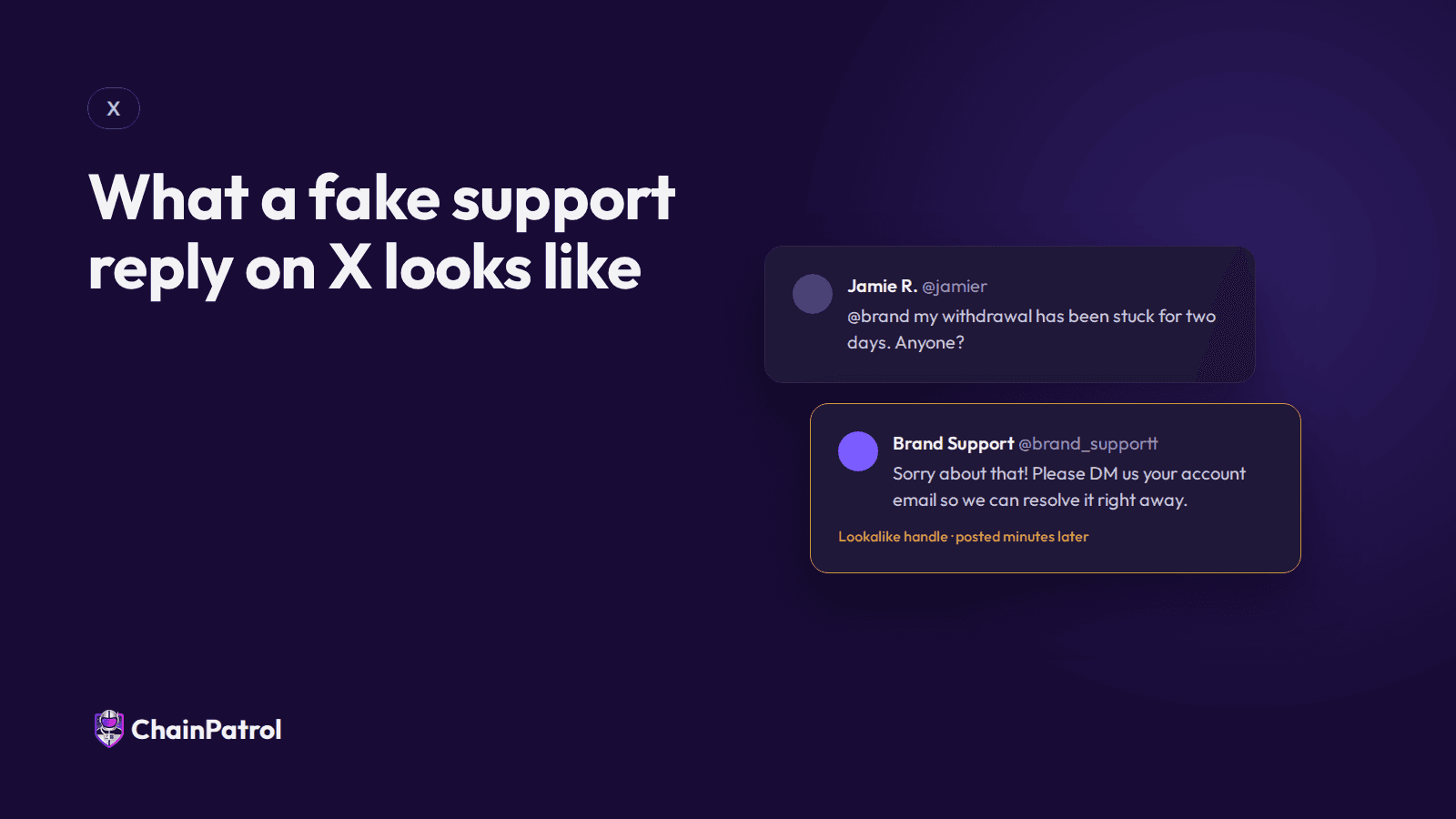
What a fake support reply on X looks like
Fake support replies arrive minutes after a complaint, look almost like you, and push for a DM or link. The anatomy, and the tells to teach customers.
Nikita Varabei
Fake support accounts

Fake support vs fan accounts vs parody: why platforms reject impersonation reports
Platforms reject impersonation reports when the account is allowed to exist. How X separates fake support from parody and fan accounts.
Nikita Varabei
Fake support accounts