February Updates: Reporting, Organization, and Detections Improvements
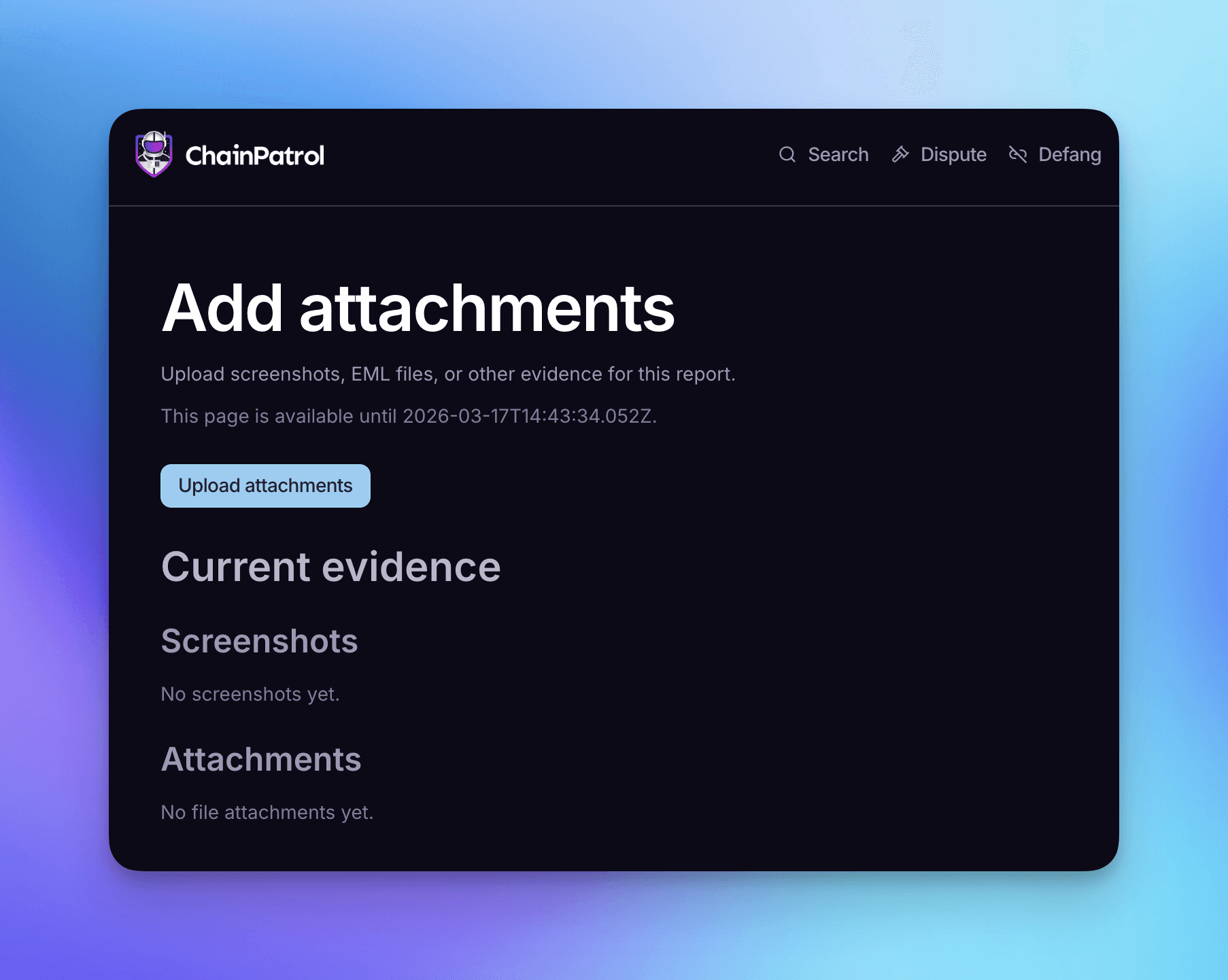
Supporting Evidence for Reports
Reports via Slack and Intercom now support adding additional attachments as evidence. Add screenshots, files, and .eml files to provide evidence to hosting providers and platforms of abuse.
These updates make it easier to investigate threats, preserve supporting evidence, and allow users to have more control for what data gets submitted with reports.
Default Organization Setting & Trademark Improvements
Users who belong to multiple organizations can now choose a default organization to redirect to when logging in. Organization settings were also expanded to support a Name of the Rights Owner field in trademark registration records.
These changes make multi-account access smoother and improve the completeness of brand enforcement information stored in ChainPatrol.
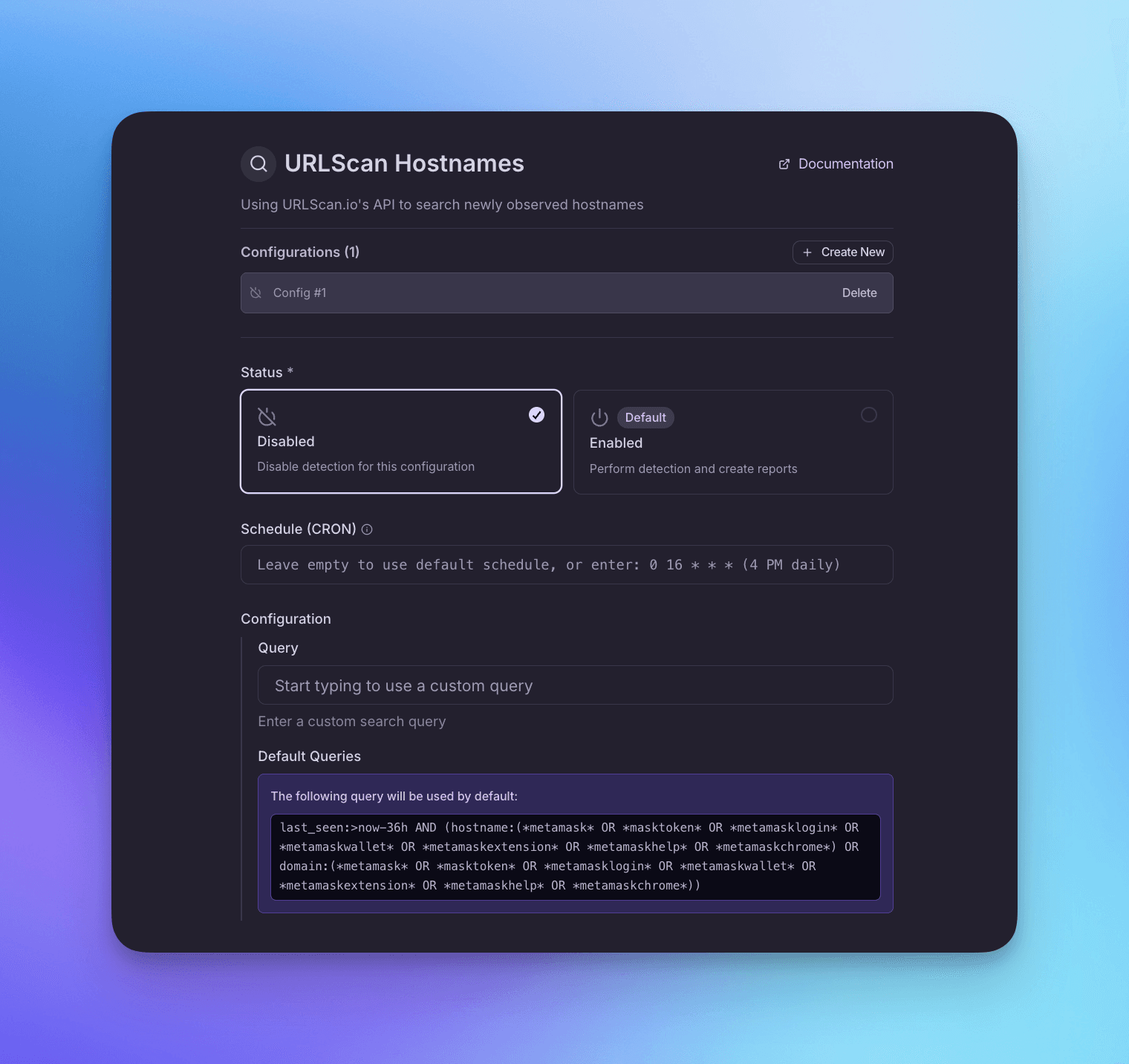
Twitter Detection in Replies & Mentions + URLScan Hostname Detection
Profile protection on X/Twitter now scans both replies and mentions, expanding coverage for impersonation and support-scam activity targeting protected accounts. URLScan detection sources were also improved with hostname-based detection and org-aware default queries, helping surface newly observed attacker infrastructure without requiring every customer to manually configure searches.
Platform Coverage Expansion
ChainPatrol expanded support across additional asset types, platforms, and takedown targets during February:
Rarible NFT asset support
New takedown coverage for Issuu, Letterboxd, and Vercel-hosted domains
Flathub, SoundCloud, VidLii, Vevioz, and Zapper platform support
This expands the range of surfaces customers can monitor, normalize, and take action on directly inside ChainPatrol.
Additional Improvements
Reports now include blockchain explorer links for contract addresses, making Web3 investigations faster from the report view.
Liveness check workflows were also improved with clearer status feedback and domain-hold detection, helping distinguish assets that are still online from domains already disabled at the registrar level.